The funniest part is that everybody involved understands the system.
The organizers know.
The DJs know.
The attendees know.
Even the one punctual friend slowly learns after standing awkwardly near an empty dance floor three separate times.
Because Balkan events do not really begin when the venue opens.
They begin when enough socially important people arrive for everybody else to emotionally relax.
That is the real start time.
A lot of younger Balkan social culture quietly revolves around “arrival calibration.”
Nobody wants to be:
the first person dancing,
the first group arriving,
or the only people standing awkwardly in a half-empty venue while the DJ desperately tries to create atmosphere for seven attendees and one exhausted bartender.
So people wait.
They check Instagram stories first.
They message group chats:
“Who’s there?”
They wait for enough proof that the event has officially become:
alive.
And honestly, this behaviour is so normalized that many Balkan young adults unconsciously build entire schedules around it.
An event may officially start at 9, but mentally everybody translates it to:
“Okay so probably 10:30.”
This becomes especially visible at weddings.
There is always:
the overly punctual family,
the relatives who somehow got lost despite attending the same banquet hall for fifteen years,
and at least one uncle angrily calling somebody asking:
“WHERE ARE YOU??”
while himself arriving 45 minutes late.
And despite all the chaos, things somehow still work.
In fact, many Balkan events would probably feel unnatural if everybody actually arrived on time.
Imagine entering a Balkan wedding where:
every guest is already seated,
the timeline is functioning perfectly,
everybody arrived calmly at the scheduled hour,
and events are proceeding with Scandinavian efficiency.
Honestly, many people would suspect something deeply disturbing was happening.
Part of this comes from how social energy forms in Balkan communities.
A lot of people do not attend events as isolated individuals.
They attend through momentum.
The atmosphere matters.
The crowd matters.
The familiar faces matter.
People often want reassurance that:
their friends are coming,
the vibe is good,
and the event has socially “activated” before fully committing themselves emotionally.
That is why one Instagram story can suddenly cause 40 additional people to leave home at the exact same time.
And once momentum hits, it hits hard.
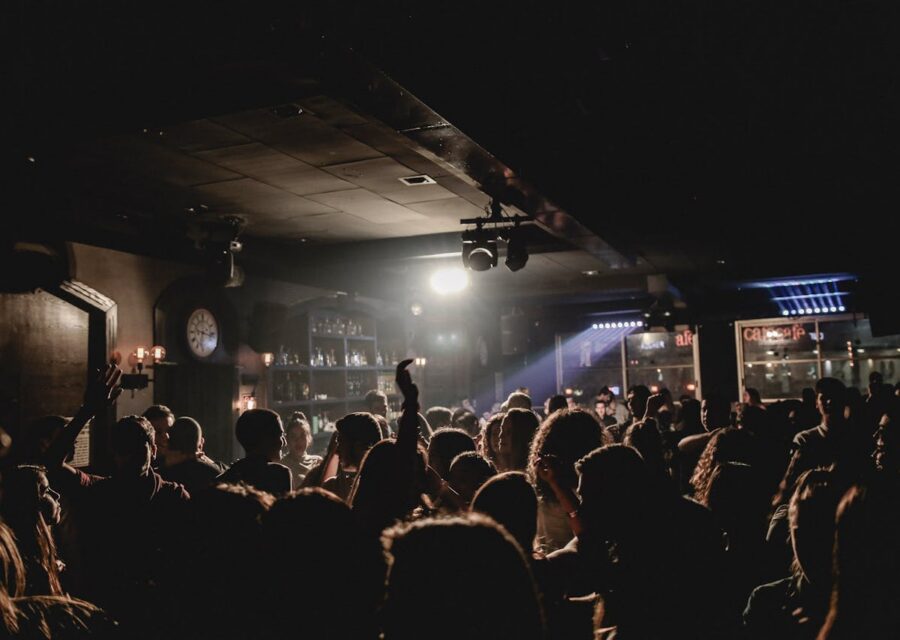
A venue that looked emotionally abandoned at 9:15 somehow becomes overcrowded by 10:40.
The organizers experience:
despair,
panic,
acceptance,
then sudden rebirth.
Every single time.
What makes this even funnier is that Balkan communities simultaneously complain about lateness constantly.
Everybody agrees:
“People should respect time more.”
Then everybody individually contributes to the exact same problem five days later.
At this point, lateness is less of a scheduling issue and more of a collective social ritual.
And honestly, Toronto itself probably makes the situation worse.
A huge portion of Balkan communities across the GTA live in:
Mississauga,
Etobicoke,
Hamilton,
Oakville,
Scarborough,
or Vaughan.
So before anybody even arrives at an event, there is already:
traffic,
parking stress,
group coordination,
last-minute outfit changes,
and somebody insisting on stopping for food first despite the event literally being centered around food.
Meanwhile, younger Balkan Canadians often operate in large mixed friend groups, meaning half the planning process becomes:
waiting for other people to confirm first.
Which creates the classic Balkan group-chat phenomenon:
23 people react positively to the event.
11 say:
“We should definitely go.”
Nobody buys tickets.
Then suddenly everybody purchases them within the same 14-minute window after enough people commit publicly.
And despite all the jokes, there is actually something kind of comforting hidden underneath all this chaos.
People care about atmosphere.
They care about entering spaces that already feel socially alive.
They care about shared energy.
They care about familiar faces.
They care about community momentum.
A Balkan event is rarely just:
show up,
consume entertainment,
leave.
It is usually:
wander between tables,
run into people unexpectedly,
have 19 side conversations,
reconnect with somebody you haven’t seen since high school,
promise to hang out again,
then somehow leave the venue one hour after originally saying goodbye.
And honestly, if a Balkan event ever started perfectly on time, ended efficiently, and everybody left immediately afterward…
most people would probably never attend again because the event would feel deeply culturally incorrect somehow.